
February 8, 2026
Retail's biggest priority is also its biggest gap
Here's a number that should make every retail executive pause: 65% of business and technology professionals in retail say improving customer experience is their top business priority, according to Forrester's 2025 Priorities Survey. That's higher than achieving growth targets (58%), improving brand (55%), or reducing costs (50%).
CX isn't just on the agenda. It's at the top.
And yet, Forrester's own Customer Experience Index shows a decline in CX quality across US and Canadian retail. The industry is prioritizing customer experience more than ever and delivering it less effectively.
What's going on?
The investment is there
It's not a spending problem. 77% of retail and wholesale organizations expect to increase their technology budgets over the next 12 months, despite macroeconomic headwinds. When asked about IT priorities, 60% cited improving employee experience and 57% cited improving customer experience as top objectives.
The money is flowing. The intent is clear. So why isn't CX quality keeping pace?
The Gladly 2026 Customer Expectations Report found that 88% of consumers said their issue was resolved through AI — but only 22% said the experience made them prefer the company. Resolution looks strong on paper. Loyalty tells a different story.
The experience gap
Look closer at how retailers are investing, and a pattern emerges. 45% are adding or improving digital experiences, while 42% are focused on improving human interactions. These are two halves of the same whole.
The retailers getting CX right understand that a customer's experience doesn't live in a single channel or a single interaction. It's the sum of every touchpoint: automated and human, digital and physical, transactional and relational. They're investing in digital efficiency and human connection.
The gap appears when organizations optimize these in isolation. When the AI doesn't know what the agent knows. When the app experience feels disconnected from the store experience. When efficiency metrics improve but customer sentiment doesn't.
The cost is real. The 2026 Customer Expectations Report found that 47% of consumers won't buy again after a bad handoff, and 48% abandon when they're forced to repeat themselves.
The employee experience connection
One of the more telling findings from Forrester: 53% of retailers plan to invest in expanding in-store technology and improving salaries and working conditions for associates. That's a single investment category, not two separate line items.
The companies paying attention have figured out that customer experience and employee experience are connected. Frontline teams who feel supported, equipped, and informed deliver better service. Technology that makes their jobs easier translates directly to how customers feel.
When 55% of retailers say employee experience is a top business priority, they're being strategic. CX and EX rise together.
The integration challenge
Of course, none of this is easy. 30% of retail tech professionals pointed to integrating new technologies with existing systems as their biggest IT challenge. Another 25% cited misalignment between IT and non-tech departments.
These are the reasons CX investments don't always translate to CX outcomes. You can buy the best tools on the market, but if they don't talk to each other, and if the teams using them aren't aligned, the customer still feels the friction.
What separates the leaders
The retailers pulling ahead aren't just spending more. They're thinking differently about what CX technology is supposed to do.
Resolving inquiries and automating transactions is table stakes. The goal is to create experiences that build lasting customer relationships, the kind that drive retention, repeat purchases, and lifetime value.
That requires technology architected around the customer, not around individual tickets or sessions. It requires measurement that goes beyond efficiency to include loyalty, sentiment, and revenue impact. And it requires treating CX as a strategic function, not a cost center.
Forrester's data says CX is retail's top priority. The question is whether the investments match the ambition: not just in dollars, but in design.

Recommended reading
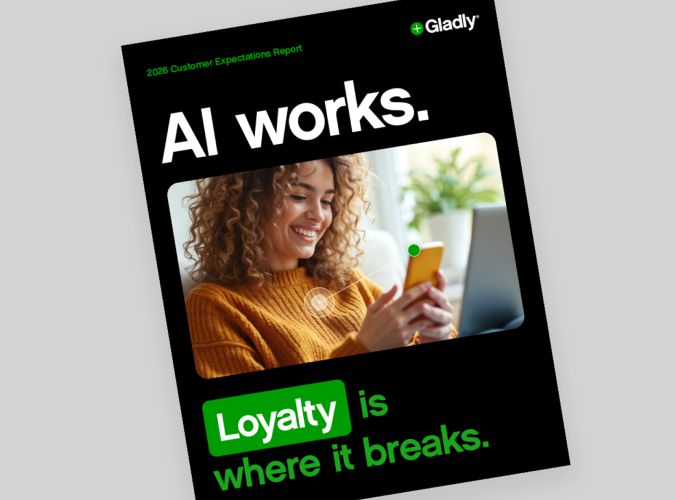
2026 Customer expectations report
New national study: Customers now start with AI, but poor experiences drive defection, even when problems get solved. Download the data.

Retail Customer Service Guide
Defining a Great Retail Customer Experience
By
Angie Tran

New CIO? Your CX stack will tell you everything
The most revealing move a new CIO can make has nothing to do with admin access. Call your support line. File a ticket. See what happens.
By
Angie Tran