
January 27, 2026
Your biggest revenue leak isn't cart abandonment
The best ecommerce brands understand that the sale isn't the finish line. It's the starting point for a relationship that can generate more value than the first purchase ever did.
Most brands still treat post-purchase service as damage control. Something breaks, someone complains, and support steps in to fix it. But the brands winning on customer lifetime value see it differently. Every order tracking question, return request, or "where's my package" message is a chance to build trust that leads to the next purchase.
Here's how they do it.
The hidden cost of treating service like a chore
When you think of customer service as a cost center, you optimize for one thing. Reducing contacts. Deflecting questions. Getting people off the phone as fast as possible.
That mindset creates a problem. Customers will leave a brand after a bad service experience. And in ecommerce, where switching costs are zero and competitors are one click away, that's not just a statistic. It's a business threat.
The math is simple. Acquiring a new customer costs five to seven times more than retaining an existing one. Yet most brands spend their budgets chasing new buyers while letting existing customers drift away because post-purchase service feels generic, slow, or frustrating.
When someone reaches out after placing an order, they're not just asking a question. They're testing whether you're worth coming back to.
Order tracking is the new front door
The most frequent post-purchase question isn't "how do I return this?" It's "where is my order?"
Order tracking inquiries make up roughly 80% of post-purchase contacts. Most brands see this as noise. High volume, low value, something to automate away with a tracking link and a bot.
But smart brands see it differently. They recognize that the anxiety behind "where's my package?" is an opportunity. When someone asks about their order, they're engaged. They're thinking about your brand. They care enough to check in.
Brands that respond with clarity, personality, and proactive updates turn a routine inquiry into a moment of reassurance. And reassurance builds trust. Trust drives repeat purchases.
Note.
Increasing retention by just 5% can boost profits by 25% to 95%. That's not because you're selling more products. It's because you're reducing the cost of selling them and increasing how much each customer is worth over time.
Ecommerce personalization isn't just product recommendations
Most ecommerce brands think personalization means showing you products you might like based on your browsing history. That's one layer. But it's surface level.
Real personalization happens in service. When someone contacts you and the support team knows what they ordered, when they ordered it, and what they've bought before, the conversation changes. It stops being transactional. It becomes relational.
This is where customer lifetime value gets built. Not in the marketing funnel. In the post-purchase experience.
When a customer asks about a return and your team can see they've been a loyal buyer for two years, the response should reflect that. Maybe you waive a fee. Maybe you offer a faster replacement. Maybe you just acknowledge their history and thank them for sticking around.
Those moments matter. They're the difference between a one-time buyer and a repeat customer.
Repeat customers spend 67% more than new customers. They also refer more people and cost less to serve because they already understand how your brand works.
But you only unlock that value if your service experience makes them feel known.
Ecommerce returns don't have to hurt retention
Returns are expensive. The average return costs retailers between 15% and 30% of the original sale price. Shipping, restocking, processing. It all adds up.
But here's what's more expensive. Losing the customer entirely because the return experience was painful.
Most brands treat returns like a necessary evil. Complicated forms, long wait times, vague policies. The message customers receive is clear. We didn't want you to return this.
Pro tip.
The best brands flip that script. They make returns easy, transparent, and fast. Not because they love losing revenue, but because they know the customer who returns an item might buy three more things next month if you handle it right.
When someone starts a return, your system should already know what they bought, when they bought it, and what your policy allows. No back and forth. No frustration. Just resolution.
That's how you turn a potentially negative moment into proof that your brand respects the customer's time and money.
Customer loyalty programs work when service supports them
Loyalty programs are everywhere. Points, tiers, exclusive access. But here's the problem. Most of them live in marketing and have no connection to service.
A customer reaches out with a question, and the support team has no idea they're a VIP member. Or worse, they know but can't do anything about it because the systems don't talk to each other.
When service and loyalty are disconnected, the program loses power. Customers don't feel valued because the people they talk to don't treat them any differently than a first-time buyer.
Note.
Brands with strong customer loyalty programs see a 20% increase in repeat purchase rates. But that only works if the loyalty extends beyond points. It has to show up in how you serve people.
When a loyalty member contacts you, your team should see their status immediately. They should be able to apply benefits, offer upgrades, or escalate issues faster. That's not special treatment. That's honoring the relationship the customer has invested in.
The repeat purchase rate reveals everything
If customer lifetime value is the long game, repeat purchase rate is the scoreboard.
It tells you how many customers come back for a second order. And the gap between first-time buyers and repeat customers is where most ecommerce revenue lives or dies.
The average repeat purchase rate for ecommerce is around 27%. That means roughly three out of four customers never come back. They buy once, and you never see them again.
Why? Because the post-purchase experience didn't give them a reason to return.
Maybe the order took too long, and no one communicated why. Maybe they had a question and couldn't get a straight answer. Maybe the return process felt like punishment. Or maybe everything went fine, but nothing about the experience made them remember you over the dozen other brands selling similar things.
Repeat customers are built in the weeks and months after the first purchase. Not through ads. But through service.
When someone reaches out, how fast do you respond? Do you solve their problem completely or make them ask twice? Do you know who they are, or do they have to explain themselves every time?
Those details determine whether they come back.
Why Shopify customer service matters more than you think
If you're running on Shopify, customer service isn't an afterthought. It's part of your infrastructure.
Millions of websites run on Shopify, and most of them are competing in the same spaces. Similar products. Similar pricing. Similar shipping times.
The differentiator isn't what you sell. It's how you treat people after they buy.
Shopify makes it easy to launch a store. But it doesn't make it easy to build loyalty. That requires connecting your customer service system to your order data, your CRM, and your customer history so every conversation has context.
Pro tip.
Brands with strong customer loyalty programs see a 20% increase in repeat purchase rates. But that only works if the loyalty extends beyond points. It has to show up in how you serve people.
When a loyalty member contacts you, your team should see their status immediately. They should be able to apply benefits, offer upgrades, or escalate issues faster. That's not special treatment. That's honoring the relationship the customer has invested in.
That level of service isn't a luxury. It's table stakes for brands that want to survive in a space where customers can switch to a competitor without thinking twice.
The role of AI in ecommerce customer experience
AI in customer service isn't about replacing people. It's about giving them better tools.
The best use of AI in ecommerce is handling the high-volume, repetitive questions that bury support teams. Order status. Shipping updates. Return policies. These are questions that don't need a human, but they need to be answered fast.
When AI handles those, your team gets time back for the conversations that actually matter. The frustrated customer whose package is late. The loyal buyer who wants to upgrade their order. The person who's deciding whether to return something or keep it.
Companies using AI in customer service report a 30% reduction in response time. That's not because AI is faster. It's because it's handling the work humans shouldn't have to do.
Pro tip.
But here's the key. AI only works if it has access to the right data. If your systems are disconnected and your AI can't see order history, customer preferences, or past conversations, it's just a fancy FAQ bot.
Great AI connects everything. Orders, returns, loyalty status, communication history. So whether a customer talks to AI or a person, the experience feels continuous.
What winning brands do differently
Brands that turn post-purchase service into repeat revenue share a few things in common.
They respond fast. Not hours later. Not the next day. They answer questions in minutes because they know delays create doubt.
They personalize every interaction. They know what you bought, when you bought it, and how many times you've come back. That context shapes the conversation.
They make problems easy to solve. Returns, exchanges, refunds. Whatever the issue, the process is clear and the resolution is fast.
They treat service like a relationship, not a transaction. Every conversation is a chance to prove the customer made the right choice.
And they measure what matters. Not just how many tickets they closed, but how many customers came back.
The bottom line
Post-purchase service isn't a cost. It's an investment in customer lifetime value.
Every order tracking question is a chance to reassure. Every return is a chance to rebuild trust. Every complaint is a chance to prove you're worth sticking with.
The brands that understand this don't just survive in ecommerce. They grow. Because they're not chasing one-time buyers. They're building relationships that pay off for years.
If you're still thinking about customer service as damage control, you're leaving money on the table. The real revenue isn't in the first sale. It's in the second, third, and tenth.

Maya Williams
Manager, Inbound Marketing
Maya Williams is a data-driven marketing strategist specializing in digital and inbound growth. At Gladly, she writes about how AI and analytics can transform CX teams into revenue-driving marketing engines. With deep experience in digital strategy and customer engagement, Maya brings a marketer’s perspective to how brands can use data and technology to create more impactful customer experiences.
Recommended reading

eCommerce Customer Service Guide
eCommerce businesses have the luxury of functioning like standard retail companies, but without the significant overhead of managing a storefront.
By
Angie Tran

How AI is transforming ecommerce service
Watch how Gladly, Loop, Simplesat & Assembled use AI to reshape support, feedback, staffing, and returns for modern ecommerce brands.
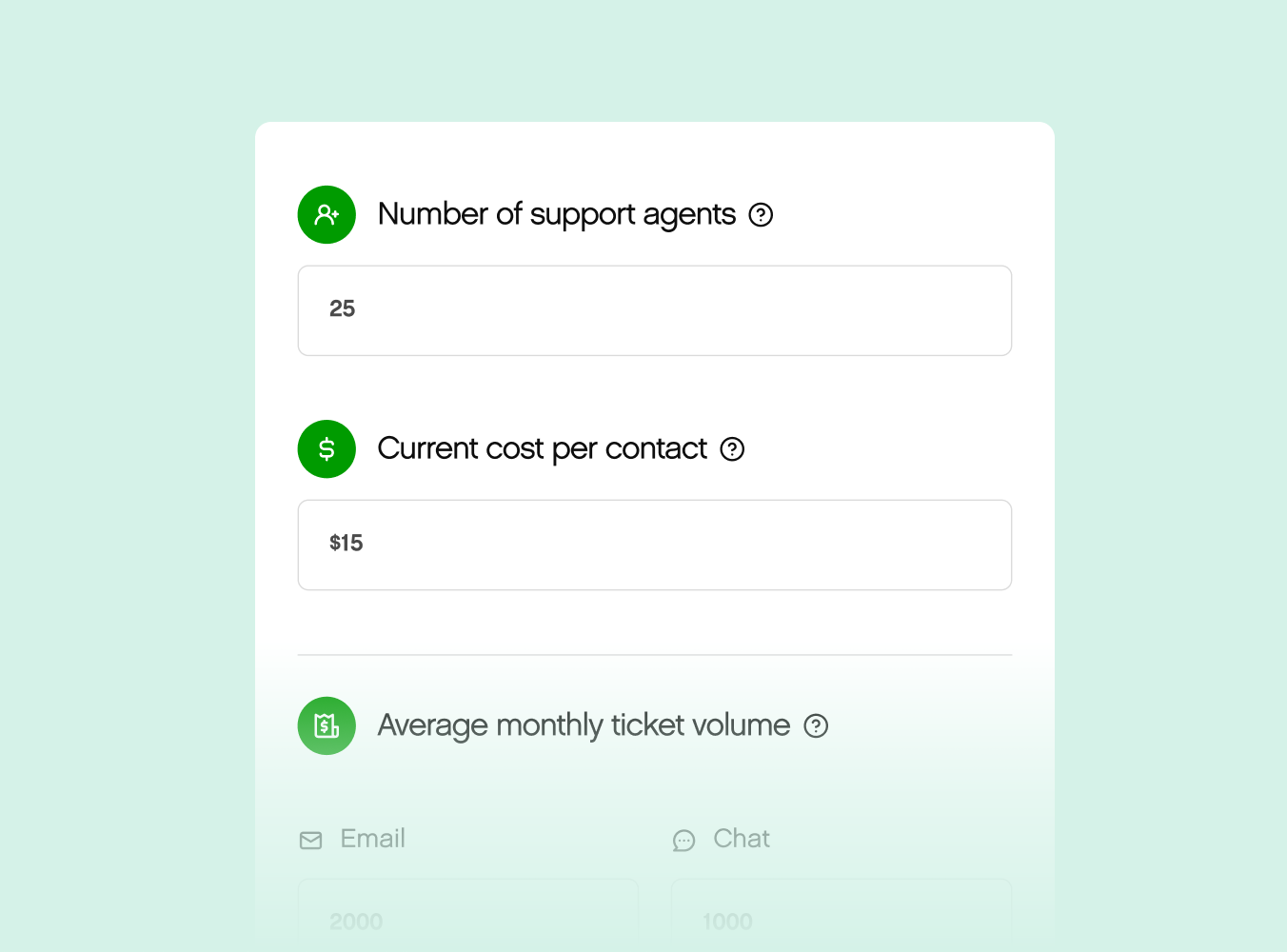
CX ROI calculator
See how much you can save with the CX ROI calculator. Estimate AI impact, efficiency gains, and cost savings in minutes.